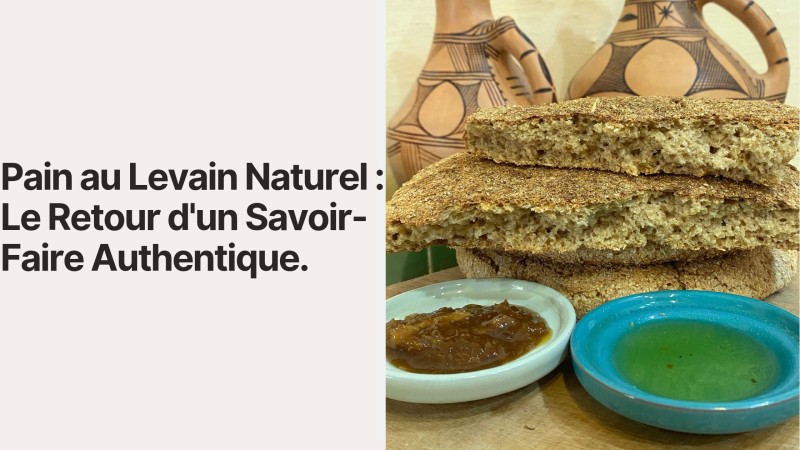
Not so long ago, in Moroccan homes, bread was not bought. It was made. The dough was kneaded the day before, left to ferment slowly, and the next morning, the smell of baking bread filled the house. That bread had a flavour that many people are still looking for today, without always knowing where to find it. At The Green Souk, we are bringing this tradition back to life through artisan breads made with natural sourdough, using time-honoured baking methods.
Natural Sourdough Bread, Crafted with Patience
Good bread is not made on an assembly line. It is made with time, good flours, and patience. This conviction guides our work.
Our breads are made exclusively with organic wholegrain flours, sourced from small local producers we know personally. All the grains we use come from ancient seed varieties. Einkorn, a rustic cereal cultivated for millennia, renowned for its finesse and digestibility. Buckwheat, naturally gluten-free, with slightly nutty notes. These varieties, long neglected by industrial agriculture, are now returning to our tables for good reasons: they are richer in nutrients, more flavourful, and better suited to their terroirs. To go further, you can read our article on Illkess wheat from Imilchil, an emblematic example of a preserved ancient seed.
The Secret of Natural Sourdough Bread: 100% Sourdough, Nothing Else
This is the fundamental difference between industrial bread and artisan bread. Our breads are made with 100% natural sourdough. No commercial yeast, no additives, no preservatives, no improvers, no artificial ingredients.
Sourdough is a living culture. Wild yeasts and lactic acid bacteria that develop in flour and water, and transform the dough over the hours. This slow process, which cannot be accelerated, is what gives the bread its complexity. Scientific studies have shown that sourdough fermentationimproves the digestibility of proteins and carbohydrates, while reducing phytate content that limits mineral absorption.
What Slow Fermentation Changes
Slow fermentation with sourdough is not a technical detail. It is what makes the difference between a bread you eat and a bread you savour.
It develops rich aromas, deep and slightly tangy, that commercial yeast cannot produce. It gives a generous crust, crisp and golden, and a flavourful crumb, airy and well-structured.
But above all, it turns bread into a more digestible food. The lactic acid bacteria in sourdough partially pre-digest the proteins and carbohydrates in the flour. Combined with wholegrain flours and ancient grains, long fermentation enhances digestibility and promotes better digestive tolerance.
Finally, the ancient seeds used by The Green Souk have a naturally lower gluten content than modern wheats selected for their gluten richness. This is not a gluten-free bread, but it is a gentler bread, better tolerated by sensitive individuals. To learn more about lower-gluten cereals, read our article on rye.
Artisan Bread: A Choice of Support
Choosing The Green Souk's artisan breads means rediscovering the taste of real homemade bread. That taste we thought was lost, that we could no longer find in industrial baguettes — white, tasteless, going stale within hours.
It is also a choice of support. Supporting small local producers, who cultivate these ancient grains with respect for their terroirs. Supporting artisan baking, which prioritises quality organic ingredients, respect for time, and authenticity.
A natural sourdough bread that takes 24 hours to ferment is not a more expensive bread. It is a bread worth what it costs.
Conclusion
Bread is part of our culture, our history, our memories. By making it as it once was — with organic wholegrain flours, ancient seeds, and natural sourdough — The Green Souk reconnects with what has always given bread its value: patience, know-how, and respect for ingredients.
Discover all our artisan breads in our selection. Follow our news on Instagram, Facebook, and our WhatsApp group to find out about our bakes.