Multifloral Honey from Taznakht: The Honey of Tradition
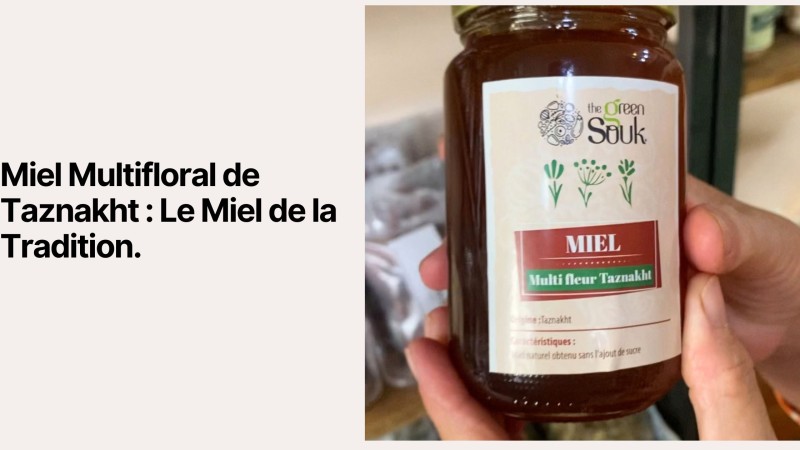
Honey from Taznakht is not just any honey. It is the fruit of a terroir, a landscape, and a know-how. Produced by a shepherd from the mountains of Taznakht, this multifloral honey embodies an ancient beekeeping tradition, intimately linked to the pastoral life and agriculture of this region of southern Morocco.
Taznakht: A Crossroads in the Heart of Berber Country
Taznakht is a town in Morocco located in the Drâa-Tafilalet region, about 80 kilometres south of Ouarzazate . Perched at nearly 1,000 metres above sea level, it lies at the crossroads of the Atlas and Anti-Atlas ranges .
Historically, Taznakht was an essential link in the caravan routes connecting Telouet, Aït Ben Haddou, and Taourirte. Its asset was its strategic position between the Souss, the Drâa, and Telouet. It was a crossing point and exchange hub where grains, skins, dates, pottery, jewellery, salt, sugar, and tea transited .
The landscape of Taznakht is that of a sub-arid steppe, characterised by the predominance of xerophilous plants adapted to difficult climatic conditions: low rainfall (less than 200 mm per year), low winter temperatures, and hot summers . The predominant soils are light, shallow, rich in limestone, and of loamy-sandy or loamy texture .
It is in this austere environment that the inhabitants have developed a life strategy combining livestock rearing, dry and irrigated crops, crafts, and mining . Subsistence agriculture relies on cereal cultivation (barley, durum wheat), market gardening, and arboriculture, dominated by almond, apple, and olive trees .
The Carpet Tradition: A Pride of Taznakht
Taznakht is above all known as a major centre for Berber carpet weaving . The carpets of Taznakht, sometimes called “Glaoua carpets”, are renowned for their exceptional density, shimmering colours, and sophisticated geometric patterns .
This tradition dates back centuries. The Jebel Sirwa massif has been home to Berber communities since the 8th century, linking carpet-making to sheep rearing, whose Sirwa wool is renowned for its silky texture .
The patterns of Taznakht carpets carry symbols: diamonds evoking the protective eye, chevrons representing dunes, stars symbolising desert guides. The colours are inspired by Saharan landscapes, with natural dyes once extracted from local plants .
Weaving is traditionally the domain of women. In the family circle, women were assigned to wool preparation and weaving, spending an average of six hours a day at the loom. Men were responsible for taking the production to the souk . Even today, carpet and hanbel production supports over 23,000 weavers in the region .
The Beekeeper Shepherd: A Mountain Know-How
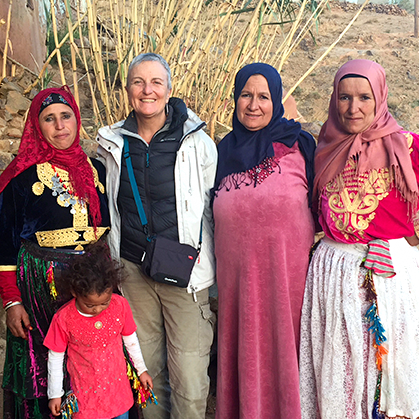
It is in this context of pastoral life and traditional agriculture that our honey producer operates. A shepherd from the mountains of Taznakht, he perpetuates a beekeeping tradition inherited from his ancestors.
Sheep rearing is an important resource for the local population. Numerous sheepfolds called azibdot the vast expanses of the Sirwa massif. These sheepfolds are only occupied part of the year, with flocks coming to graze in summer in the high-altitude pastures .
Beekeeping fits naturally into this pastoral way of life. The bees forage freely on the wildflowers of the mountain, benefiting from a diverse and preserved flora. This small-scale practice, respectful of natural cycles, produces honey of rare authenticity.
What Is Multifloral Honey?
Multifloral honey, also called polyfloral or wildflower honey, is honey whose nectar comes from many different flower species .
Unlike monofloral honeys, which come mainly from a single plant species (such as thyme, orange blossom, or eucalyptus honey), multifloral honey is the result of diversified foraging. The bees visit the flowers available in their environment, depending on the seasons and flowering.
This diversity has direct consequences on the honey's characteristics: its colour, taste, aroma, and nutritional composition vary according to the flowers foraged and the harvest season .
The Advantages of Multifloral Honey
Multifloral honey has several advantages over monofloral honeys.
A diversified nutritional richness. The variety of flowers foraged results in a more complex composition of vitamins, minerals, and bioactive compounds. Multifloral honey contains B vitamins (B1, B2, B6, and even B12), vitamin C, vitamin K, as well as minerals such as iron, calcium, magnesium, and potassium . It also contains a wide range of amino acids and organic acids .
A varied antioxidant profile. Multifloral honeys are rich in flavonoids and phenolic compounds, which neutralise free radicals responsible for cellular ageing and certain chronic diseases . A scientific study conducted on multifloral honeys demonstrated their strong antioxidant capacity, with particularly low IC50 values .
Antibacterial properties. Multifloral honey has natural antimicrobial activity against several pathogenic bacteria, including Staphylococcus aureus, Escherichia coli, and Pseudomonas aeruginosa . This action relies on several mechanisms: acidic pH, presence of hydrogen peroxide, and high viscosity that prevents the development of bacterial colonies .
Prebiotic properties. Honey contains oligosaccharides and complex carbohydrates that feed beneficial gut bacteria, contributing to a healthy intestinal flora .
A natural energiser. Rich in glucose and fructose, easily absorbed by the body, multifloral honey provides quickly available energy. It is ideal for athletes, active people, or during convalescence periods .
The Honey of Tradition
Honey from Taznakht is a honey of tradition in more than one sense. A beekeeping tradition, passed down from generation to generation in the mountains. A pastoral tradition, where the beekeeper shepherd lives to the rhythm of the seasons and transhumance. A terroir tradition, where the wild and preserved flora gives the honey its aromatic complexity.
This honey is not pasteurised. It is raw, alive, and retains all its enzymes, vitamins, and aromas. Its colour can vary from light gold to dark amber, depending on the flowers foraged. Its taste is rich, complex, with floral, herbaceous, sometimes slightly woody notes, reflecting the botanical diversity of the mountain.
How to Enjoy It
Multifloral honey from Taznakht can be enjoyed by the spoonful, to fully appreciate its complexity. It pairs wonderfully with infusions, particularly mint tea. It goes well with fresh cheeses, yoghurts, and toast. In cooking, it replaces sugar in many preparations, bringing a deeper flavour and additional nutrients.
It can also be used as a face mask, thanks to its antibacterial and healing properties .
The Green Souk: Honey from a Producer, a True Story
At The Green Souk, we select products that have a story. The multifloral honey from Taznakht is that of a mountain shepherd, who perpetuates ancestral know-how and produces honey of rare authenticity. By choosing it, you support small-scale beekeeping, respectful of the environment and local traditions.
Discover this honey of tradition in our selection of terroir products. Follow our news on Instagram, Facebook, and our WhatsApp group to discover the stories of our producers.