Organic Sun-Dried Tomatoes from Rissana: Sunshine on Your Plate
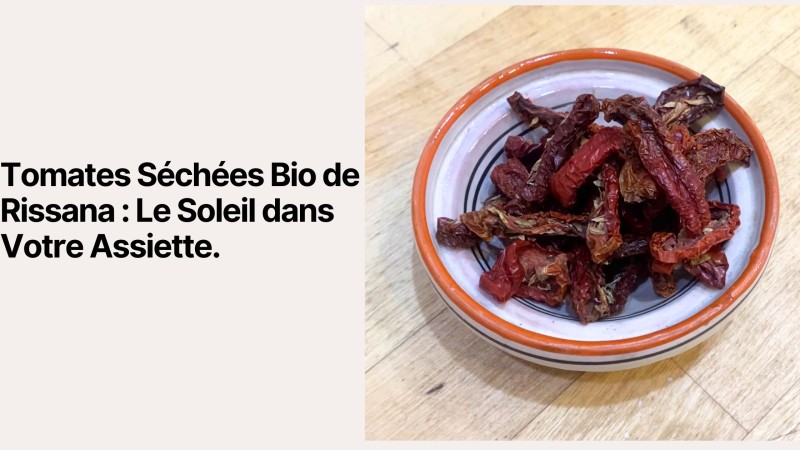
They are red, soft, intensely fragrant. The sun-dried tomatoes we offer bear no resemblance to the industrial products often found in supermarkets — plumped with water, loaded with preservatives, and stripped of flavour. Ours come from organic tomatoes ripened in the sun, grown in Rissana, in north-western Morocco, then dried using a traditional method that uses only two ingredients: salt and thyme. A concentrate of flavour, sunshine, and nutrients, capable of transforming the simplest dish into something truly savoury.
A Long-Standing Collaboration
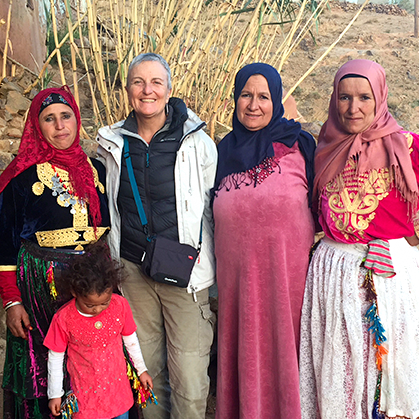
Our sun-dried tomatoes do not come from an anonymous supplier. They are the fruit of a relationship of trust built over several years with the El Amale Cooperative of Tiznit.
We have worked with this cooperative for Amlou and Ramadan cakes, two products that have found their place with our customers. Over time, a solid collaboration has developed, founded on a shared requirement: raw products, without additives, prepared using traditional methods.
Faced with the severe water shortage affecting southern Morocco, the cooperative developed an agricultural subsidiary in Rissana, in the Larache region. It is there, in a terroir where cultivation remains possible, that our tomatoes are produced. The same team, the same commitment, an adaptation to the realities on the ground.
H2 – Sun-Drying: A Natural and Demanding Method
Sun-drying tomatoes is a traditional Italian practice, particularly widespread in the south of the country — Sicily, Calabria, Apulia. There, tomatoes are cut, lightly salted, then exposed to the sun on racks for several days. This method, passed down from generation to generation, produces tomatoes with an aromatic intensity that no industrial process can match.
H3 – The Process
At our partner's site in Rissana, the process follows the same logic:
-
Tomatoes are grown according to organic farming rules, without pesticides or synthetic chemical fertilisers.
-
They are harvested at full maturity, after ripening in the sun.
-
They are cut, lightly salted, and sprinkled with thyme.
-
They are then exposed to the sun for several days, until the ideal texture is obtained: soft, fleshy, without being brittle.
H3 – What This Involves
This process requires patience and constant monitoring. It depends on weather conditions, humidity levels, and the ripeness of the fruit. It cannot be industrialised or accelerated. This is precisely what gives it its value.
H3 – The Difference from Industrial Sun-Dried Tomatoes
Sun-dried tomatoes found in shops are often dehydrated at high temperatures, treated with sulphur dioxide to preserve their colour, and sometimes rehydrated before packaging. The taste is altered, and the texture becomes uniform, without relief.
Ours undergo no treatment: no forced dehydration, no preservatives, no colourings. Just sunshine, salt, and thyme.
H2 – Organoleptic Characteristics: What Distinguishes a Quality Sun-Dried Tomato
A quality sun-dried tomato can be recognised by several signs.
Colour. A deep, sustained red, a sign of maturity and concentration. A pale or brown colour generally indicates fruit picked too early or poorly controlled drying.
Texture. Soft and fleshy, neither brittle nor tough. Sensory studies conducted on sun-dried tomatoes show that consumers prefer a product that is both "soft and fracturable" — that is, one that yields under the tooth without crumbling.
Taste. Intensely sweet, with a hint of natural acidity. The concentration of sugars and organic acids — citric, malic — during drying gives an aromatic complexity absent from fresh tomatoes. Thyme adds a slightly woody note that prolongs the flavour on the palate.
Aromas. Drying concentrates the volatile compounds responsible for tomato aroma. We find fruity notes, slightly caramelised, with a smoky hint provided by the sun and thyme.
H2 – How to Use Sun-Dried Tomatoes in Cooking
Sun-dried tomatoes are a versatile ingredient. They enrich dishes without dominating them, bringing a depth of flavour that makes all the difference.
H3 – To Enhance Everyday Dishes
-
Pasta and risottos: added at the end of cooking, they release their flavour throughout the dish.
-
Tagines and stews: they bring a sweet-savoury note that balances slow-cooked dishes.
-
Composed salads: rehydrated for a few minutes in warm water or used as they are, they enhance pasta salads, chickpea salads, or grilled vegetable salads.
-
Sandwiches, toasts, and pizzas: a few pieces are enough to transform a simple preparation into a flavourful dish.
H3 – Three Simple Recipes
Sun-dried tomato pesto
Blend a handful of sun-dried tomatoes with a garlic clove, a handful of almonds, a little parmesan, and olive oil until you obtain a smooth paste. Serve with pasta or as a spread.
Sun-dried tomato hummus
Add a few finely chopped sun-dried tomatoes to a classic hummus (chickpeas, tahini, lemon, garlic, olive oil). The result is more indulgent, with a tangy note that balances the tahini.
Mediterranean toast
Spread a slice of wholemeal bread with fresh goat's cheese. Add sun-dried tomatoes, a drizzle of olive oil, and a few fresh thyme leaves. Simple and effective.
H2 – The Health Benefits of Sun-Dried Tomatoes
Sun-dried tomatoes are not only flavourful. They also concentrate the nutrients of fresh tomatoes, sometimes dramatically.
H3 – A Remarkable Concentration of Lycopene
Lycopene is the red pigment in tomatoes, a powerful antioxidant associated with cardiovascular protection and the prevention of certain cancers. Drying concentrates this compound: around 29 g of sun-dried tomatoes provide nearly 11.6 mg of lycopene, compared to only 3.2 mg for 123 g of raw tomato.
H3 – Superior Bioavailability
A scientific study showed that the bioavailability of lycopene from sun-dried tomatoes reaches 58%, compared to 28.67% for fresh tomatoes. In other words, the body assimilates lycopene from sun-dried tomatoes more effectively than from raw tomatoes.
H3 – Vitamins, Minerals, and Fibre
Sun-dried tomatoes also provide:
-
Vitamin C, vitamin A, and vitamin K.
-
Potassium, copper, manganese, and iron.
-
Around 12 to 13 g of fibre per 100 g, which contributes to satiety and healthy intestinal transit.
H3 – An Important Clarification
These benefits concern sun-dried tomatoes without additives. Industrial versions, often loaded with salt, preservatives, and sulphites, do not offer the same nutritional profile. The simplicity of our preparation — salt and thyme only — preserves all the qualities of the fruit.
H2 – The Green Souk: Organic Sun-Dried Tomatoes from a Short Supply Chain
At The Green Souk, our commitment is to offer you products that make sense. Our sun-dried tomatoes come from the Rissana subsidiary of the El Amale Cooperative of Tiznit, with which we have been collaborating for several years.
-
Organic quality: tomatoes grown without pesticides or synthetic chemical fertilisers.
-
No additives: salt and thyme only.
-
Sun-dried: traditional method, without forced dehydration.
-
Traceability and fair pay: direct work with the cooperative, without intermediaries.
-
Short supply chain: every purchase supports a local supply chain and traditional know-how.
We invite you to discover our sun-dried tomatoes in our selection of terroir products and to follow our news on Instagram, Facebook, and our WhatsApp group so you don't miss any of our arrivals.
Conclusion
Sun-dried tomatoes are not a simple condiment. They are concentrates of sunshine, flavour, and nutrients, prepared using a method that has lost none of its relevance. By choosing those from The Green Souk, you are opting for an organic product, without additives, and you are supporting a cooperative that has adapted to the realities on the ground.
Discover our organic sun-dried tomatoes from Rissana in our selection of terroir products. Follow the arrival of new harvests on our social media.