The Date Palm Groves of Southern Morocco: A Millennia-Old Ecosystem to Preserve
The date palm groves of southern Morocco are not mere orchards. They are complex ecosystems, shaped by centuries of human know-how, where every plant has its place and its function. From Tafilalet to the Drâa Valley, by way of Alnif, these oases have nourished civilisations, structured territories, and sheltered remarkable biodiversity. Today, they are under threat. Climate disruption, overexploitation of groundwater, and the gradual abandonment of traditional practices are jeopardising this fragile balance. At The Green Souk, we believe that valuing the dates from these palm groves is one of the keys to ensuring their survival and that of an entire ecosystem.
Origins: How Dates Arrived in Morocco
The date palm has been cultivated for over 6,000 years, making it one of the oldest fruit trees domesticated by humans. Native to Mesopotamia and Arabia, its cultivation spread across North Africa and the Sahara in very remote times, along caravan routes and migratory paths.
A Wild Palm Present Since Antiquity
In south-western Morocco, a specific palm species, Phoenix atlantica, grew wild along the coast, from Mazagan to the Souss, and penetrated far inland. This wild palm, with barely edible fruit, is the ancestor of the cultivated varieties that were progressively selected for their quality. Greco-Roman coins depict images of palms, bearing witness to the importance of this tree in ancient Mediterranean civilisations.
Tafilalet, the Cradle of the Moroccan Date
It was in the Tafilalet region of south-eastern Morocco that date palm cultivation truly flourished. The town of Boudenib is considered the cradle of the Majhoul variety, which was selected there. In the 17th century, the name of this date appeared in writing for the first time, and its reputation would span the centuries. Today, Tafilalet remains the heart of Moroccan date production.
Irrigation Systems: The Hydraulic Genius of the Oases
If palm groves have been able to flourish in areas where rainfall does not exceed 150 mm per year, it is thanks to ingenious irrigation systems developed over a thousand years ago. Two main techniques transformed arid lands into verdant oases: khettaras and séguias.
Khettaras are underground galleries that capture water from groundwater upstream and channel it, by simple gravity, to cultivated areas. Inspired by Persian qanats, this system can be spotted from the sky by a line of earth mounds protecting vertical shafts that can descend up to 50 metres. At the bottom, these shafts connect through a gently sloping gallery, forming an underground network that can stretch over 10 to 20 kilometres. At the beginning of the 20th century, the Al Haouz region alone counted 5,000 kilometres of galleries and canals irrigating more than 150,000 hectares.
Séguias, for their part, are open-air canals that carry water from rivers or springs to the plots. An indispensable complement to khettaras, they allowed fine distribution of water between the oasis gardens, under rigorous community management in which each family had a precisely measured access time.
The Layering of Crops: A Three-Tier Ecosystem
The traditional Moroccan palm grove is not a monoculture. It is a complex agroforestry system, where several layers of vegetation overlap to create a protective microclimate and optimal productivity.
The Date Palm: The Protective Canopy
At the top, the date palm forms the canopy. Its fronds create beneficial shade that protects crops from the full force of the sun and limits evaporation from the soil. The palm is not a tree in the strict sense — it does not produce true wood — but it structures the entire ecosystem.
Fruit Trees: The Intermediate Layer
In the shade of the palms grow fruit trees: fig trees, pomegranate trees, almond trees, olive trees, apricot trees. These trees benefit from the protection of the palms while producing fruit that diversifies both food resources and farmers' income. The pomegranate tree occupies an important place in this layer, followed by the fig tree.
Low Crops: Cereals, Legumes, and Roses
At ground level, annual crops complete the ensemble: wheat, barley, legumes, but also aromatic plants such as the Dadès rose, famous for its floral water. Shrubs and hedgerows shelter natural auxiliaries and limit erosion.
This three-tier assemblage, based on agroforestry principles, creates what researchers call the "oasis effect". It generates a cooler, more humid microclimate, protects soils, encourages biodiversity, and allows diversified production on a single plot. It is a model of sustainable agriculture, proven by centuries of practice.
The Threats Facing the Palm Groves
Despite its ingenuity, this millennia-old system is now in danger. Moroccan palm groves are bearing the full brunt of the combined effects of climate change and human pressure.
Drought and Groundwater Depletion
Morocco has experienced a succession of droughts over several decades that are exhausting water resources. Groundwater, overexploited by excessive pumping, is falling dangerously. In some oases, the water level has dropped by several dozen metres, rendering khettaras inoperative.
Soil and Water Salinisation
The use of increasingly saline water for irrigation leads to progressive salinisation of soils. This salinity exceeds critical thresholds for the survival of the date palm, weakening trees and reducing yields.
Bayoud Disease
Bayoud, caused by a soil fungus (Fusarium oxysporum f. sp. albedinis), is a fatal and incurable disease that has been ravaging Moroccan palm groves for over a century. The Boufquouss variety is particularly susceptible to this disease, exposing it to the risk of disappearance.
Rural Exodus and Abandonment
Young people are leaving the oases to seek work in the cities, leaving abandoned plots behind. Neglected palm groves become more vulnerable to fire, disease, and sand encroachment. It is a vicious circle: fewer hands, less care, more degradation.
The Heritage of Traditional Varieties
Despite these threats, Morocco retains an exceptionally rich date palm heritage. Moroccan palm groves present one of the richest varietal profiles in the world, with more than 453 varietiesrecorded. This heritage is concentrated in three main regions: Ouarzazate, Tafilalet, and Tata.
Majhoul: The Internationally Renowned Date
Majhoul is undoubtedly the most famous Moroccan variety. Originally from Tafilalet, it is recognisable by its generous size, fleshy texture, and sweet, caramelised flavour. Its international reputation makes it the most sought-after date on export markets. But this fame has a downside: it concentrates attention and investment, to the detriment of traditional varieties.
Boufquouss: A Threatened Heritage Variety
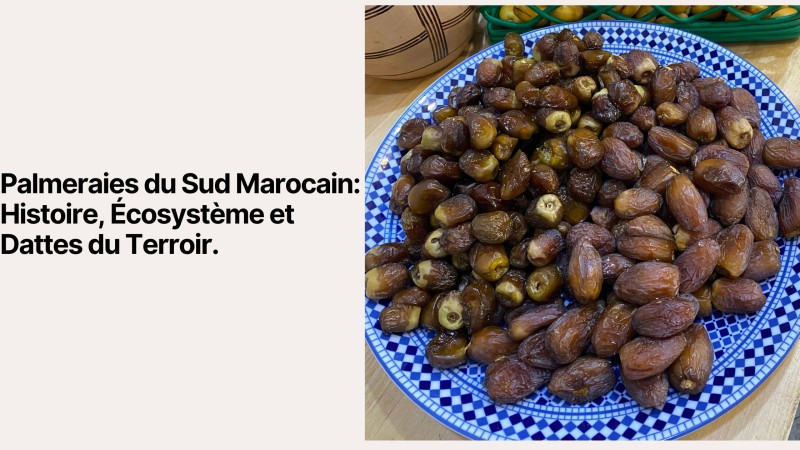
Boufquouss is a traditional variety with a spherical shape, semi-soft consistency, and translucent brown colour. Its flavour is intensely aromatic, with slightly caramelised notes. It accounts for less than 10% of total production and is considered the variety most susceptible to Bayoud disease. Its vulnerability makes it an endangered variety, whose survival depends directly on the willingness to cultivate and value it.
Valuing Dates to Save the Palm Grove
The survival of palm groves cannot rely on replanting programmes alone. It depends on a virtuous circle: if dates are valued, farmers will have an interest in maintaining their plots, replanting, and passing on their knowledge. If they are not, abandonment will continue.
The Importance of Short Supply Chains
Valuing dates requires reducing intermediaries. By working directly with producers, it is possible to guarantee better pay for farmers and to preserve varieties that have no place in standardised industrial circuits. Every intermediary removed means a little more income remaining in the oasis.
Raising Consumer Awareness
Every date purchased is an act of support for an ecosystem. By choosing dates from maintained palm groves, harvested at maturity and untreated, consumers participate in preserving a living heritage. They also encourage young people to stay or return, by making oasis agriculture economically viable.
The Green Souk: Dates from Alnif, from Living Palm Groves
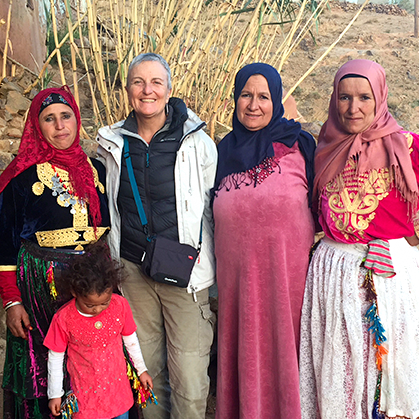
At The Green Souk, our commitment is to offer you products that make sense. Our dates come from Alnif, a region in south-eastern Morocco located in the province of Tinghir, in the heart of Drâa-Tafilalet. We work directly with local producers who perpetuate ancestral know-how.
-
Origin in Alnif: our dates come from palm groves in this region, renowned for the quality of its fruit and the diversity of its varieties.
-
Traditional varieties: we favour heritage varieties such as Boufquouss, often neglected by commercial circuits.
-
Harvested at maturity: our dates are picked at full maturity, without post-harvest treatment.
-
Short supply chain: by working directly with producers, we guarantee fair pay and full traceability.
-
Support for the ecosystem: every purchase helps keep palm groves alive and encourages replanting.
We invite you to discover our selection of terroir dates and to follow our news on Instagram, Facebook, and our WhatsApp group so you don't miss any of our arrivals and our partnerships with oasis producers.
Conclusion
The palm groves of southern Morocco are much more than orchards. They are the fruit of millennia-old human intelligence, a model of sustainable agriculture adapted to the most extreme conditions. But this heritage is fragile. Climate change, disease, and abandonment threaten to erase what generations have built.
Valuing dates, particularly traditional varieties such as Majhoul and Boufquouss, is not a simple act of consumption. It is a choice that allows palm groves to survive, farmers to live decently from their work, and a unique ecosystem to continue to exist.
Discover our dates from Alnif in our selection of southern products. Follow the arrival of new harvests on our social media.