
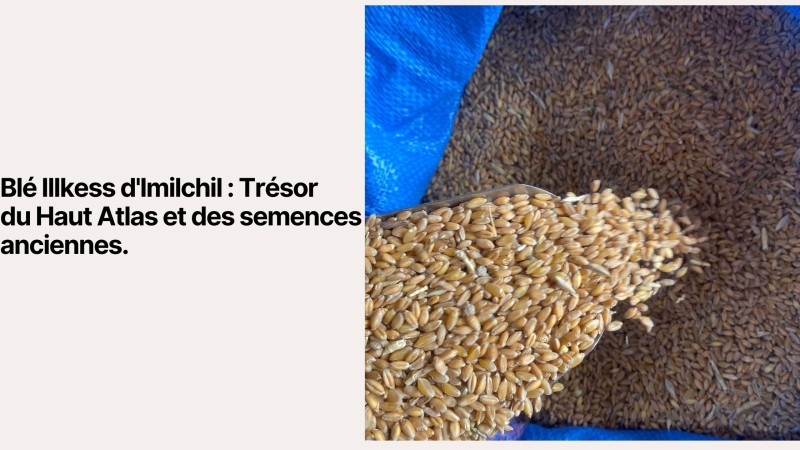
Illkess Wheat from Imilchil: The Cereal Treasure of the High Atlas
In the mountains of the Moroccan High Atlas, at over 2,000 metres above sea level, a cereal survives that the modern world could have erased. Illkess wheat, cultivated for generations in the Imilchil region, is much more than a simple ancient variety. It embodies peasant know-how, a remarkable adaptation to the extreme conditions of the mountains, and a valuable nutritional alternative for today's consumers. At The Green Souk, we firmly believe that valuing these ancient seeds is an act that is agricultural, cultural, and related to public health all at once.
Imilchil: A Cold Oasis in the Heart of the High Atlas
Imilchil is a Berber village located in the province of Midelt, in the heart of the eastern High Atlas. Perched at around 2,300 metres above sea level, it is famous for its Moussem of Engagement, an annual festival that attracts visitors from around the world. But beyond the folklore, Imilchil is above all a major site of mountain agriculture.
An Extreme Climate, an Agriculture of Adaptation
Growing conditions in Imilchil are among the most difficult in Morocco: harsh winters, late frosts, short seasons, poor soils, and pronounced aridity. Researchers describe these areas as "cold oases" connected to collective grazing lands — an ingenious agricultural system created by Amazigh populations despite extreme climatic conditions.
In this context, only rustic and adapted varieties can survive. And this is precisely where Illkess wheat comes into play.
Illkess Wheat: A Variety of Exceptional Resilience
Illkess wheat — also spelled Irks in some studies — is a local population of durum wheat (Triticum turgidum ssp. durum). Its name means "slender ear" in the local language, referring to its morphology.
Remarkable Agronomic Characteristics
What distinguishes Illkess from modern varieties is its capacity for adaptation to conditions that few plants can withstand:
-
Cold resistance: it tolerates spring frosts that destroy most crops.
-
Drought tolerance: it thrives with very little water, an essential quality in a region where irrigation is rare or non-existent.
-
Disease resistance: it shows good resistance to yellow rust and tolerance to Fusarium.
-
Tall stature: the plant can reach 80 to 145 cm in height, a size that allows it to compete with weeds without herbicides.
These characteristics are not mere botanical curiosities. They make Illkess a crop suited to organic and peasant farming, without chemical inputs.
A Wheat Destined for Traditional Bread
Illkess is mainly used to make a traditional bread called "tahtocht", baked under ashes. This bread has a remarkable particularity: it retains moisture and keeps longer than modern breads. This quality was essential for mountain populations, often isolated during the winter months.
Why Are Ancient Seeds Lower in Gluten?
One of the most frequently cited arguments in favour of ancient wheats concerns their gluten content. Ancient varieties such as Illkess generally have a lower gluten content than modern wheats resulting from intensive selection.
A Question of Protein Composition
Ancient wheats contain fewer gliadins and glutenins, the protein fractions that form the gluten network in dough. Scientific studies have shown that ancient wheat species such as einkorn, emmer, and small spelt have lower levels of immunoreactive proteins than modern common wheat. Small spelt, for example, has a gluten content of around 7%, compared to 10 to 12% for conventional wheats.
Why This Matters
A less concentrated gluten of different quality may be better tolerated by some people sensitive to high gluten loads. This is not to say that these wheats are suitable for coeliac patients — which would be false and dangerous — but rather that they offer a gentler alternative for consumers who wish to reduce their gluten load without giving up bread and cereals.
Improved Digestibility
Ancient wheats, often consumed whole (with their bran and germ), provide more fibre, minerals, and vitamins than refined flours. Their digestion is slower, which contributes to a lasting feeling of satiety and a gradual release of energy.
The Importance of Valuing and Preserving Ancient Seeds
The disappearance of ancient varieties is not inevitable. It is the result of agricultural and economic choices that have favoured yield over diversity. Today, it is urgent to reverse this trend.
An Irreplaceable Genetic Heritage
Each ancient variety carries within it resistance genes to disease, drought, and cold — characteristics that modern varieties have sometimes lost. Recent studies have analysed 101 local populations of durum wheat from the mountain oases of the eastern Atlas, revealing a high phenotypic diversity (average Shannon-Weaver index of 0.62). This diversity is a life insurance policy for agriculture in the face of climate change.
Peasant Know-How to Preserve
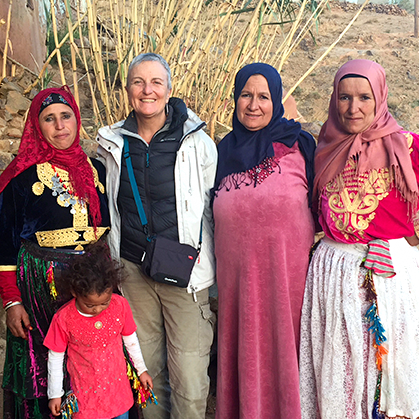
Behind every ancient seed are women and men who cultivate, select, and pass it on. These mountain farmers perpetuate ancestral agricultural practices, often without chemical inputs, and preserve varieties that modern agriculture has abandoned. Supporting these producers means maintaining a living heritage and irreplaceable know-how.
A Response to Consumer Expectations
Demand for authentic, local, and healthy products continues to grow. Ancient wheats, with their distinct nutritional profile and their history, meet this expectation. Their cultivation fits naturally into organic and low-input systems, where they compete with modern varieties in terms of yield stability.
Supporting Small-Scale Mountain Farmers
The farmers of Imilchil and the surrounding valleys are the guardians of this cultivated biodiversity. But they face considerable challenges: isolation, limited market access, low incomes, and the exodus of young people.
At The Green Souk, our commitment is clear: directly connecting these producers to city consumers, simplifying the distribution chain to ensure better pay for farmers. We work with local cooperatives that share our values: respect for natural cycles, absence of chemical inputs, and preservation of ancient varieties.
Every purchase of products from these supply chains directly supports these mountain communities and helps maintain a living agriculture in territories where it is under threat.
Conclusion
Illkess wheat from Imilchil is not a relic of the past. It is a response for the future to the challenges of Moroccan agriculture: climate adaptation, preservation of biodiversity, autonomy for small farmers, and nutritional quality. By choosing products made from ancient seeds, you are doing much more than making a purchase: you are supporting a living heritage and participating in the construction of a more resilient food system.
We invite you to discover our products made from ancient grains in our selection of terroir products, and to follow our news on Instagram, Facebook, and our WhatsApp group so you don't miss any of our arrivals and our partnerships with mountain producers.